
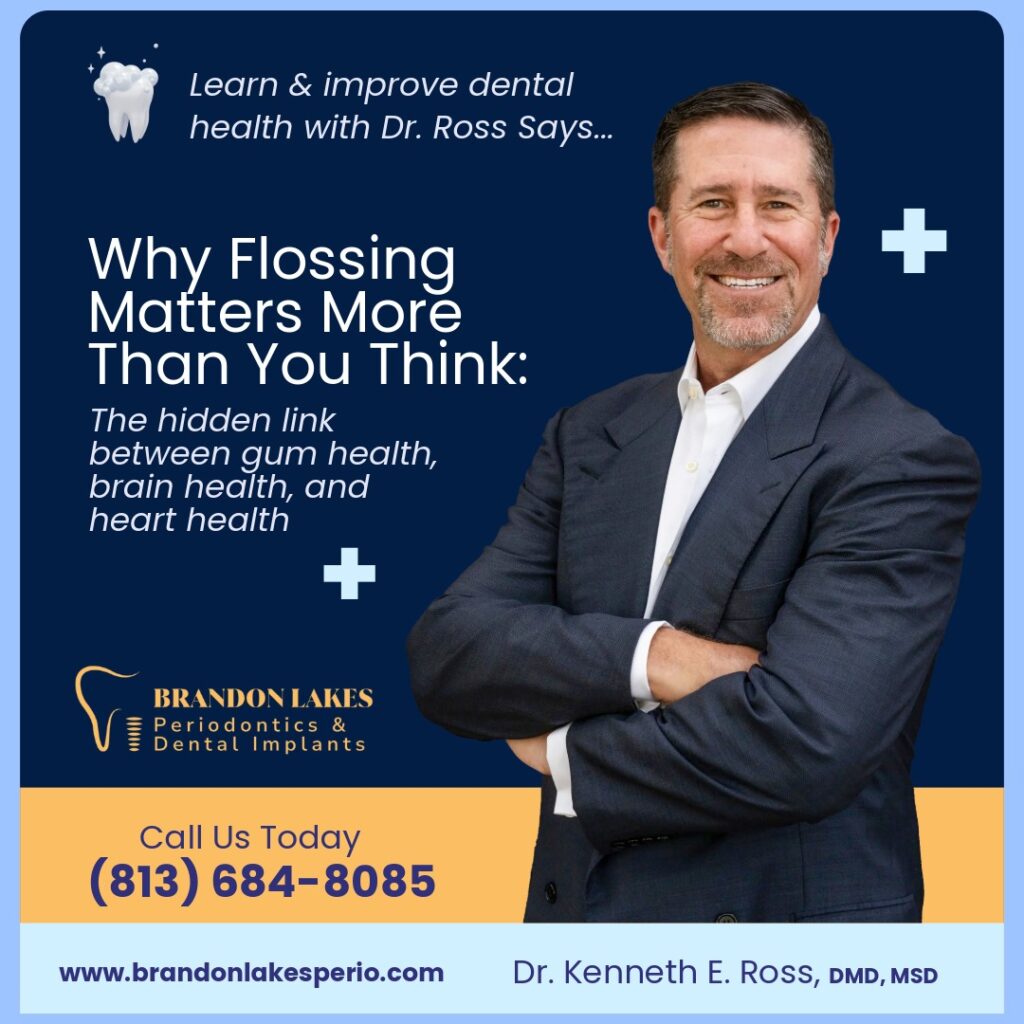
Why Flossing Matters More Than You Think: the hidden link between gum health, brain health, and heart health.
Many people view flossing as a minor dental habit—something recommended by dentists primarily to prevent cavities or remove food particles. In reality, flossing plays a much larger role in protecting overall health.
Modern medical research increasingly shows that oral health and systemic health are deeply connected. The condition of your gums can influence inflammation throughout the body and may contribute to serious health conditions affecting the heart, brain, and immune system.
At Brandon Lakes Periodontics and Dental Implants, Dr. Kenneth Ross regularly educates patients about how daily oral hygiene habits—especially flossing—can significantly reduce the inflammatory burden placed on the body.
Understanding why flossing is so important begins with understanding inflammation.
Why Inflammation Is Both Helpful and Harmful
Inflammation is one of the body’s most important defense mechanisms. When functioning properly, it allows the immune system to fight infections and repair damaged tissue.
For example, when the body detects bacteria, viruses, or injury, the immune system sends white blood cells and signaling molecules to the affected area. These responses create the classic signs of inflammation: redness, swelling, heat, and sometimes pain. This short-term response—known as acute inflammation—is essential for healing.
However, problems occur when inflammation becomes chronic.
Chronic inflammation happens when the immune system remains active for extended periods of time, often due to persistent infections or long-term irritants. Instead of helping the body heal, this ongoing inflammatory response can begin to damage healthy tissue.
According to research summarized by the Harvard Medical School, chronic inflammation is associated with numerous diseases including:
Cardiovascular disease
Type 2 diabetes
Alzheimer’s disease
Arthritis
Certain cancers
Inflammation that originates in the mouth—particularly from untreated gum disease—can contribute to this systemic inflammatory burden.
The American Academy of Periodontology notes that periodontal disease is an inflammatory condition capable of affecting other parts of the body because oral bacteria and inflammatory molecules can enter the bloodstream through infected gum tissue.
What Happens When You Don’t Floss?
Brushing your teeth twice a day is an important part of maintaining oral health, but brushing alone cannot clean every surface of your teeth.
A toothbrush primarily cleans the visible outer surfaces of the teeth. However, it cannot effectively remove plaque and debris from between teeth or beneath the gumline, where bacteria frequently accumulate.
Flossing targets these areas that brushing misses.
When flossing is neglected, the following process can occur:
Plaque Buildup
Plaque is a sticky film made up of bacteria, food particles, and saliva. This bacterial layer forms continuously on teeth and must be removed daily.
Bacterial Irritation
When plaque remains between teeth, bacteria multiply and release toxins that irritate gum tissue. This irritation triggers inflammation.
Tartar Formation
If plaque is not removed, it hardens into calculus (tartar). Tartar cannot be removed with brushing or flossing alone and requires professional cleaning.
Development of Gum Disease
Persistent bacterial buildup leads to gum inflammation and infection. Over time, this infection can progress into periodontal disease, a chronic condition that damages the structures supporting the teeth.
Understanding Gum Disease
Gum disease, also known as periodontal disease, is one of the most common chronic inflammatory conditions in adults.
The Centers for Disease Control and Prevention estimates that nearly half of adults over the age of 30 in the United States have some form of periodontal disease.
The disease generally develops in stages.
Gingivitis
The earliest stage is gingivitis, characterized by:
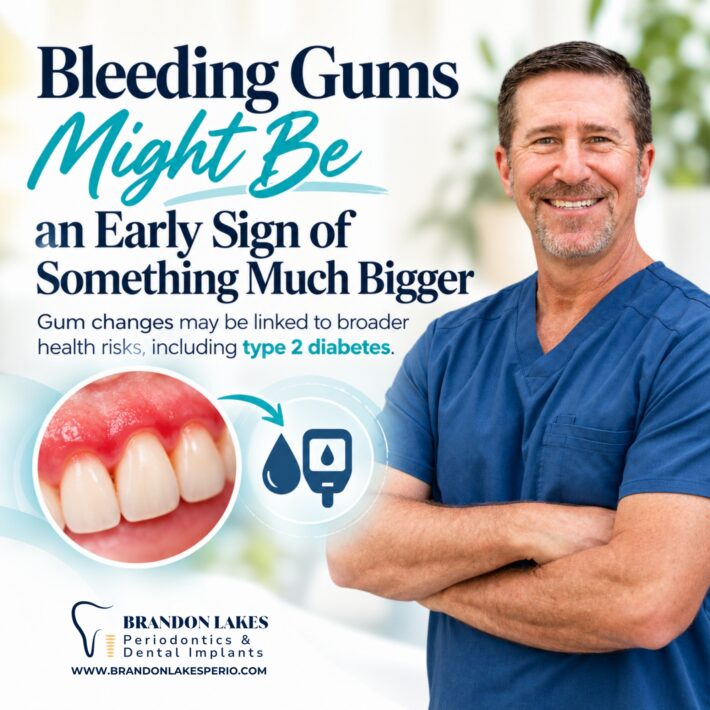
Red or swollen gums
Bleeding when brushing or flossing
Mild gum tenderness
At this stage, the condition is typically reversible with proper oral hygiene and professional dental care.
Periodontitis
If gingivitis is not treated, it can progress into periodontitis, a more severe form of gum disease.
Periodontitis affects the deeper structures supporting the teeth, including the bone and connective tissue. Over time, this can cause:
Gum recession
Bone loss
Deep periodontal pockets
Tooth mobility
Tooth loss
As a periodontal specialist, Dr. Kenneth Ross focuses on diagnosing and treating these conditions before irreversible damage occurs.
How Gum Disease Affects the Entire Body
The mouth contains hundreds of species of bacteria. When gums become inflamed or infected, bacteria can enter the bloodstream through microscopic openings in gum tissue.
Once in circulation, these bacteria and inflammatory molecules can travel throughout the body.
Researchers have found associations between periodontal disease and several systemic health conditions.
According to the American Heart Association, inflammation plays a central role in cardiovascular disease, and periodontal disease may contribute to increased inflammatory activity within blood vessels.
Similarly, the National Institute of Dental and Craniofacial Research notes that ongoing oral infection can increase the body’s overall inflammatory response, which may influence other chronic diseases.
How Flossing May Influence Brain Health
Researchers studying neurological health have identified possible links between periodontal disease and cognitive decline.
When gum tissue is inflamed, inflammatory molecules and bacterial toxins can enter the bloodstream and interact with immune cells. These interactions may contribute to neuroinflammation, which is inflammation occurring within brain tissue.
Some studies have also explored how oral bacteria may affect the blood-brain barrier, a protective structure that regulates which substances enter the brain.
If this barrier becomes compromised, the brain may become more vulnerable to injury or disease.
Research published in journals associated with organizations such as the National Institutes of Health has explored possible associations between periodontal bacteria and conditions such as Alzheimer’s disease. While these connections are still being studied, the findings suggest that reducing oral inflammation may play a supportive role in protecting brain health.
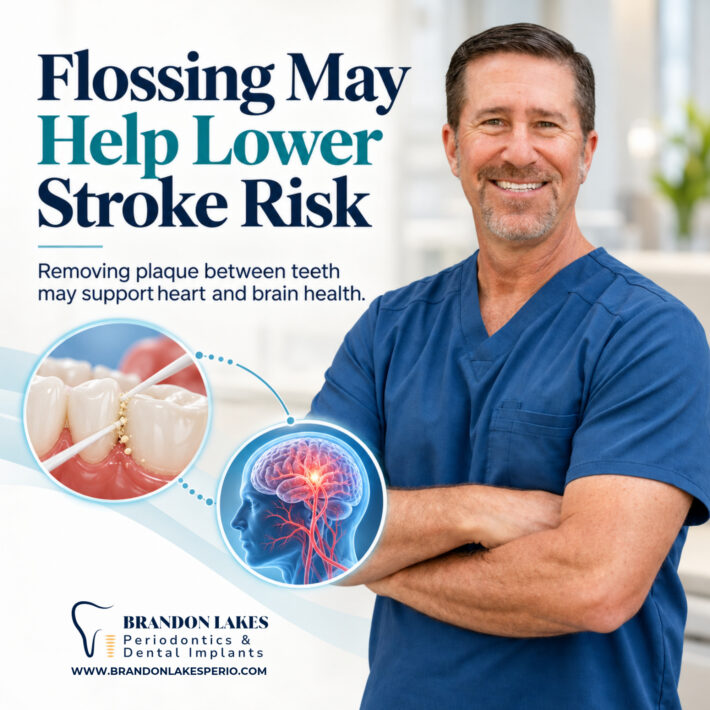
Flossing helps reduce bacterial buildup and gum inflammation, which may lower the daily inflammatory burden placed on the body.
The Link Between Gum Health and Heart Health
The relationship between oral health and cardiovascular health has been widely studied for decades.
When bacteria from the mouth enter the bloodstream, they can attach to fatty deposits in blood vessels. This process may contribute to inflammation in arterial walls.
Over time, inflammation can lead to atherosclerosis, a condition where plaque builds up inside arteries, narrowing them and restricting blood flow.
The Mayo Clinic notes that bacteria associated with periodontal disease have been found in arterial plaque, suggesting a possible connection between oral infection and cardiovascular disease.
Inflammation also affects how the body forms blood clots. When chronic inflammation is present, clotting processes may become more active than necessary.
If a clot forms within a narrowed artery, it can trigger a heart attack or stroke.
While flossing alone cannot prevent heart disease, reducing oral inflammation may help support cardiovascular health as part of a broader preventive strategy.
Flossing as a Daily Anti-Inflammatory Habit
Flossing may only take a few minutes each day, but it can have a meaningful impact on oral and systemic health.
Daily flossing helps:
Remove plaque between teeth
Prevent tartar buildup
Reduce gum inflammation
Limit harmful bacterial growth
Protect the gumline from infection
Over time, these actions reduce the amount of inflammatory signals entering the bloodstream.
In this sense, flossing can be viewed as a daily anti-inflammatory habit—one that helps protect not only your teeth and gums, but your entire body.
Specialized Periodontal Care
While daily oral hygiene is essential, professional care is sometimes necessary to treat gum disease and restore oral health.
At Brandon Lakes Periodontics and Dental Implants, Dr. Kenneth Ross provides advanced periodontal care focused on protecting the foundation of your smile.
Periodontists receive additional years of specialized training beyond dental school to treat complex gum and bone conditions.
Common treatments may include:
Scaling and root planing (deep cleaning)
Periodontal therapy
Bone regeneration procedures
Dental implant placement
Early diagnosis and treatment can stop the progression of periodontal disease and preserve long-term oral health.
Small Habits Can Have a Big Impact on Health
Flossing is often overlooked because its benefits are not always immediately visible. However, the long-term impact of maintaining healthy gums can be significant.
Healthy gums support healthy teeth—but they also support the body’s ability to function, heal, and age well.
Taking a few minutes each day to floss helps reduce chronic inflammation, protect the immune system, and support overall health.
Patients who want to learn more about protecting their gum health can schedule a consultation with Dr. Kenneth Ross at Brandon Lakes Periodontics and Dental Implants, where specialized periodontal care is focused on helping patients maintain strong, healthy foundations for life.
If you have concerns about your gum health in Brandon, Riverview, or the surrounding Tampa Bay area, schedule a consultation with Dr. Kenneth Ross, DMD, MSD at Brandon Lakes Periodontics & Dental Implants. With over 30 years of specialist experience and an academic appointment at the University of Florida College of Dentistry, Dr. Ross provides the level of periodontal expertise that can make a real difference in your long-term health. Call us at (813) 684-8085 or request an appointment online.
Click Here to Learn More or Contact Us>
Related care at Brandon Lakes Periodontics & Dental Implants: periodontal maintenance and scaling and root planing (deep cleaning) with periodontist Dr. Kenneth Ross in Brandon, FL.