
Could Targeting Gum Disease Bacteria Slow Alzheimer’s?
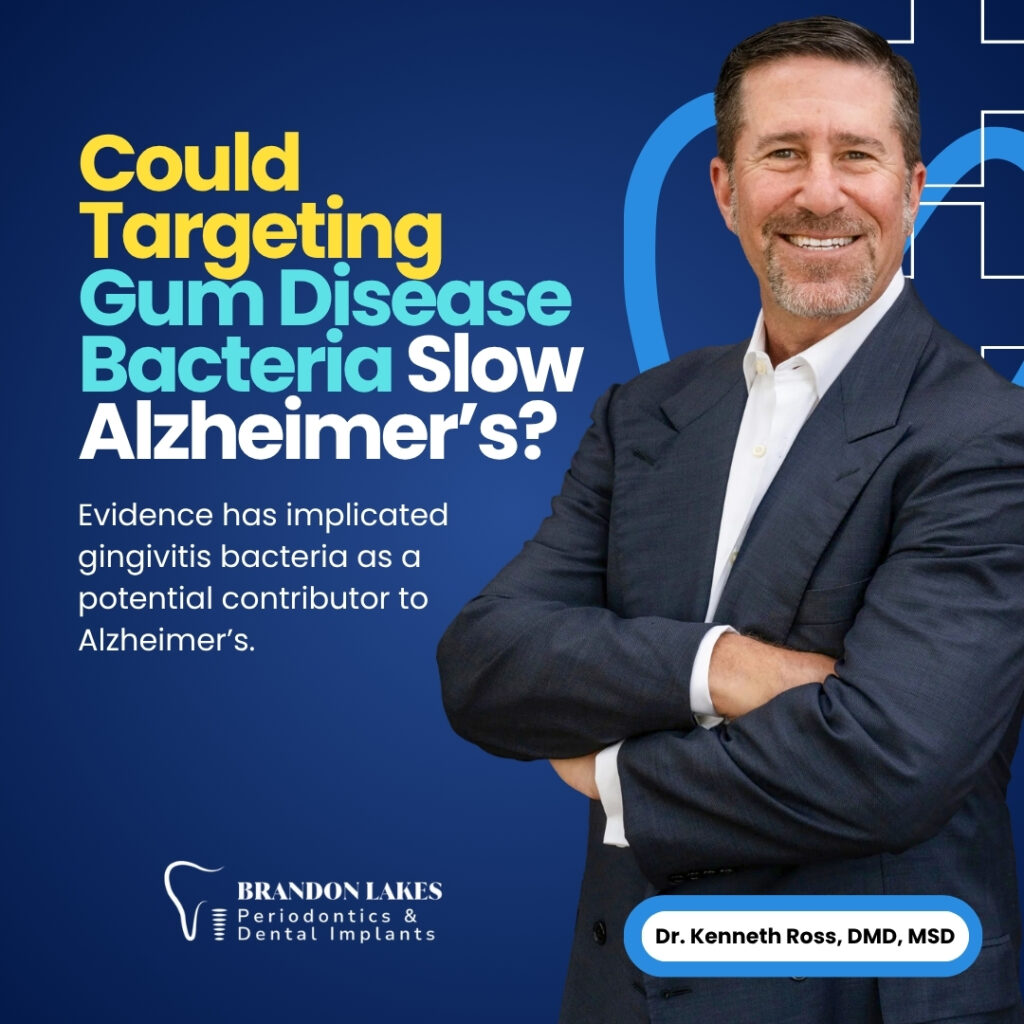
Evidence has implicated gingivitis bacteria as a potential contributor to Alzheimer’s.
The drug company Lighthouse Pharma suspects that Porphymonas gingivalis, a bacteria that causes gum disease, might trigger Alzheimer’s. They’ve begun recruiting participants for its Phase 2 trial of a drug called LHP588 that could stop the bacteria from thriving in the brain.
The idea builds on longstanding evidence linking gum disease to higher Alzheimer’s risk. Since the hallmark proteins of Alzheimer’s, beta-amyloid and tau, have antimicrobial properties, scientists speculate that when P. gingivalis reaches the brain, it spurs their buildup and other disease processes. P. gingivalis releases gingipains, enzymes called proteases that degrade the body’s defenses, drive inflammation, and help the bacteria thrive.
Gum health and Alzheimer’s risk
Many Alzheimer’s drug trials arise out of observational research. In this case, across many electronic health records studies, poor gum health is linked to a higher risk of Alzheimer’s — especially in the more advanced stages.
Does P. gingivalis reach the brain?
Studies have found evidence of both the bacteria and gingipains in the brains of people with Alzheimer’s. One study reported 40% had a protein secreted by P. gingivalis.
Whether or not the trial succeeds, there are many important health benefits to taking care of your gums. You don’t need to wait for clinical trials.
If you have concerns about your gum health in Brandon, Riverview, or the surrounding Tampa Bay area, schedule a consultation with Dr. Kenneth Ross, DMD, MSD at Brandon Lakes Periodontics & Dental Implants. With over 30 years of specialist experience and an academic appointment at the University of Florida College of Dentistry, Dr. Ross provides the level of periodontal expertise that can make a real difference in your long-term health. Call us at (813) 684-8085 or request an appointment online.
Click Here to Learn More or Contact Us>
Related care at Brandon Lakes Periodontics & Dental Implants: gum disease treatment and scaling and root planing (deep cleaning) with periodontist Dr. Kenneth Ross in Brandon, FL.