

Request an appointment
Schedule your appointment and get your complete dental evaluation today.
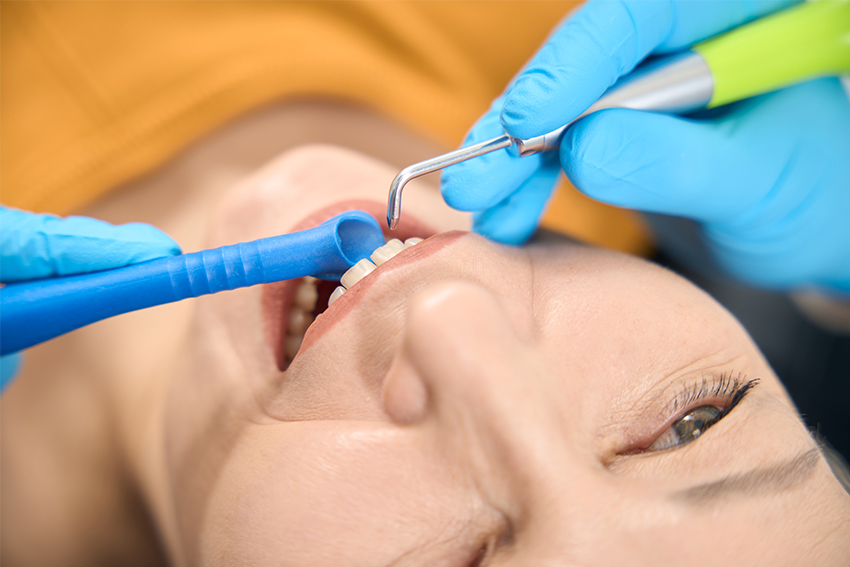
What Is Scaling & Root Planing?
If your dentist has told you that you need a "deep cleaning," you're not alone. Scaling and root planing is the most common first treatment for gum disease, and often the only one needed when it's caught early. At Brandon Lakes Periodontics & Dental Implants, periodontist Dr. Kenneth Ross, DMD, MSD, uses this non-surgical treatment to stop gum disease, reduce pocket depth and help you keep your natural teeth.
What Is Scaling and Root Planing?
Scaling and root planing (SRP) is a deep cleaning that removes the bacteria and hardened tartar that cause gum disease from below the gumline. It has two parts:
- Scaling removes plaque and tartar from the tooth surfaces and from inside the periodontal pockets, down to the bottom of each pocket.
- Root planing smooths the root surfaces so bacteria have a harder time reattaching and the gums can heal back against the tooth.
A regular cleaning stays near the top of the gums. SRP reaches the deeper areas where gum disease actually lives, which is why it’s recommended once pockets have formed.
Signs You May Need a Deep Cleaning
Gum disease is often painless in its early stages, so many patients don’t know they have it. Common signs include:
- Gums that bleed when you brush or floss
- Red, swollen or tender gums
- Persistent bad breath or a bad taste
- Gums pulling away from the teeth
- Teeth that feel loose or have shifted
- Pocket depths of 4 mm or more at your dental exam
If your general dentist has measured deep pockets or seen bone loss on X-rays, they may refer you to a periodontist for scaling and root planing.
How Scaling and Root Planing Stops Gum Disease
Gum disease starts when plaque bacteria collect below the gumline and harden into tartar. Your body responds with inflammation, and over time the gum detaches from the tooth, forming a pocket. Deeper pockets trap more bacteria, and the infection begins to destroy the bone that supports your teeth.
SRP breaks that cycle. With the bacteria and tartar removed and the roots smoothed, inflammation goes down and the gums can tighten back around the teeth. In many patients, pocket depths shrink in the weeks after treatment, making them easier to keep clean at home and during maintenance visits.
What to Expect During Treatment
SRP is done in our Brandon office, usually over one to two visits, with the mouth treated in sections.
- Evaluation. Dr. Ross reviews your X-rays and measures pocket depths to plan treatment.
- Numbing. We use local anesthetic so you stay comfortable throughout.
- Deep cleaning. Plaque and tartar are removed from above and below the gumline using ultrasonic and hand instruments.
- Root smoothing. The root surfaces are planed smooth to help the gums reattach.
- Follow-up. About 4–6 weeks later we re-measure your pockets to see how your gums have responded.
Recovery and Aftercare
Most patients return to work or normal activities the same day. For a few days afterward you may notice:
- Mild soreness or tenderness in the gums
- Some temperature sensitivity in the teeth
- Slight bleeding when brushing, which should improve quickly
Over-the-counter pain relief usually manages any discomfort. Keep brushing and flossing gently, and follow any rinse or home-care instructions we give you. As the gums heal and tighten, they may sit slightly lower on the teeth, a normal sign that swelling has gone down.
After Your Deep Cleaning: Periodontal Maintenance
Scaling and root planing controls gum disease, but it can’t remove the risk of it returning. That’s why most patients move to periodontal maintenance visits every 3–4 months after treatment. These visits keep the pockets clean and let us catch any recurrence early.
If some pockets stay deep after SRP, Dr. Ross may recommend additional gum disease treatment, such as pocket reduction surgery, to bring them to a depth you can maintain.
Does Insurance Cover Scaling and Root Planing?
Most dental insurance plans cover scaling and root planing as a periodontal procedure, often at a different level than routine cleanings. Our team will verify your benefits, file the claim for you and give you a clear estimate before treatment begins. Financing, including CareCredit, is available. Learn more on our Insurance & Financing page.
Schedule Your Periodontal Evaluation
Ready to stop gum disease in its tracks? Call (813) 684-8085 or request an appointment. Dr. Ross will evaluate your gums and build a treatment plan to help you keep your natural teeth for life.
Schedule Your Periodontal Evaluation Today
Ready to stop gum disease in its tracks?
Schedule your periodontal evaluation today. Our team will customize a treatment plan to restore your gum health—and help you keep your natural teeth for life.
Related Periodontal Services
Strengthen your gum health with additional care designed to support your deep cleaning results:
- Gum Recession Treatment – Restore your gumline with minimally invasive options like Pinhole Technique® or traditional gum grafting.
- Periodontal Disease Treatment – Learn how we diagnose, manage, and stop gum disease from progressing.
- Periodontal Maintenance – Keep your gums healthy long-term with regularly scheduled therapy visits.
- Dental Implants – Replace missing teeth with long-lasting, natural-looking implant solutions after active gum disease is controlled.
Have Questions?
Scaling and Root Planing FAQs
Is scaling and root planing painful?
We numb the area with local anesthetic, so most patients feel pressure rather than pain. Mild soreness for a few days afterward is normal.
How is a deep cleaning different from a regular cleaning?
A regular cleaning removes plaque above and slightly below the gumline on healthy gums. A deep cleaning reaches to the bottom of periodontal pockets and smooths the roots to treat active gum disease.
How long does scaling and root planing take?
Treatment is usually completed in one to two visits, with the mouth treated in sections. Dr. Ross will tell you what to expect at your evaluation.
Will my gums grow back after a deep cleaning?
SRP doesn’t regrow lost gum tissue, but it reduces swelling and helps gums reattach to the tooth. If you have gum recession, gum grafting can restore the gumline.
Can scaling and root planing save my teeth?
In many cases, yes. Stopping gum disease early protects the bone that holds your teeth in place, which is the best way to avoid tooth loss.
What happens if I don't get a deep cleaning?
Untreated gum disease usually keeps progressing. It can lead to bone loss, loose teeth and eventually tooth loss, and it has been linked to other health conditions.