
Flossing May Help Lower Stroke Risk
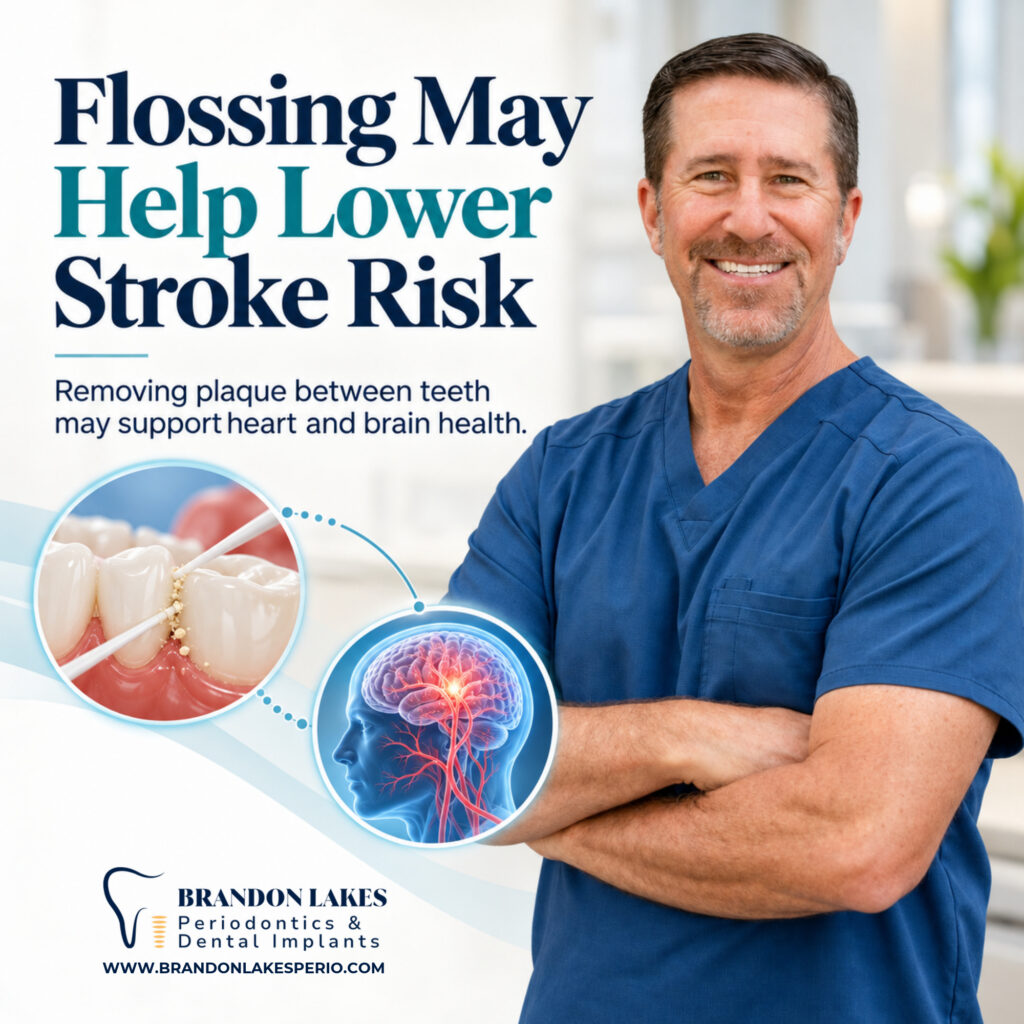
Removing plaque around teeth can do more than improve your dental health
A surprisingly simple routine — flossing your teeth — may lower your risk of stroke, according to a new study reported at an international stroke meeting.
“A small daily habit like flossing could have significant long-term health benefits,” says lead researcher Dr. Souvik Sen, professor and chair of the neurology department at the University of South Carolina Floyd School of Medicine.
Although it just takes a couple of minutes, only about one-third of people 45 and older floss every day. The percentage of people who don’t floss at all rises with age: almost 30 percent among people ages 45 to 64, 34 percent for those 65 to 74 and 44 percent of people 75 and older, according to a 2018 report from researchers at the Centers for Disease Control and Prevention.
Stroke risk increases with age and with underlying health and lifestyle factors such as high blood pressure, diabetes and cigarette smoking. Each year, more than 795,000 people in the United States experience a stroke.
The study by Sen and his colleagues at several other U.S. universities tracked the oral care habits and incidence of stroke among more than 6,200 people for 25 years taking part in the Atherosclerosis Risk in Communities (ARIC) study. They found that flossing was associated with a lower risk of strokes caused by blood clots from the heart (40 percent lower risk), blocked blood flow to the brain (23 percent) and irregular heart rhythm (12 percent), regardless of how often they brushed or went to the dentist. The results were reported in the journal Stroke in 2026.
“This research is extremely important for helping people understand what they can do with inexpensive tools daily at home that can significantly reduce their risk of stroke,” says Dr. Andrei Alexandrov, chair of the neurology department at the University of Arizona College of Medicine – Phoenix.
The link between oral health and stroke risk
This new research is consistent with what we know about the relationship between oral health and cardiovascular disease, says Dr. Thomas E. Van Dyke, senior vice president for clinical and translational research at the American Dental Association Forsyth Institute and a professor of oral medicine, infection, and immunity at the Harvard School of Dental Medicine.
If plaque, the sticky film of bacteria that forms on your teeth, isn’t removed, it can cause inflammation, which increases the risk for cardiovascular conditions, Van Dyke says. “The longer the plaque remains in place undisturbed, the more inflammatory it becomes.” Inflammation in the body is linked to hardening of blood vessels and irregular heart rate, Sen says. In other words, local inflammation in your mouth leads to systemic inflammation throughout the body.
At the same time, the bacteria that thrives when there is gum disease, known as periodontitis, can enter the circulation and damage blood vessels, says Dr. Mia Geisinger, president of the American Academy of Periodontology. “This double-whammy of oral inflammation and bacterial damage is thought to be a part of the association between periodontitis and cardiovascular disease.”
Brushing alone is not as effective at removing the plaque that leads to inflammation, Geisinger says. It doesn’t reach in between the teeth. In fact, brushing alone removes only 42 to 60 percent of plaque. Periodontitis often starts between the teeth.
Tips on flossing
Flossing can take care of much of that hidden plaque. You are probably familiar with the American Dental Association’s recommendation to brush for two minutes twice a day and clean between teeth once a day. But what if achy joints or limited mobility make flossing awkward, painful or too taxing? You have options.
“For individuals with dexterity issues … interdental brushes and powered flossers can be helpful,” Geisinger says. A dental health care professional can recommend the most effective tools and techniques for flossing.
Sen says flossing is an affordable, effective public health measure, particularly important for those with limited access to dental care. Along with other stroke prevention strategies like a healthy diet, regular exercise, and medical management of risk factors, taking care of your gums could be a simple addition to supporting heart and brain health.
Dr. Ross provides the level of periodontal expertise that can make a real difference in your long-term health. Call us at (813) 684-8085 or request an appointment online.
Click Here to Learn More or Contact Us>
Related care at Brandon Lakes Periodontics & Dental Implants: gum disease treatment and scaling and root planing (deep cleaning) with periodontist Dr. Kenneth Ross in Brandon, FL.